Nile Book Store
Kalila and Dimna - The Fables of Bidpai
Kalila and Dimna - The Fables of Bidpai
Download instructions are supplied after checkout. Read on a compatible EPUB or comic-reading app.
Couldn't load pickup availability
Description
Kalila and Dimna
The Fables of Bidpai, translated by Ion Grant Neville Keith-Falconer (Cambridge University Press, 1885)
One of the great classics of world literature: a cycle of animal fables of ancient Indian origin, most famously rendered into Arabic in the 8th century by Ibn al-Muqaffa'. This edition presents the version translated directly from a later Syriac recension by the Cambridge Arabist I. G. N. Keith-Falconer — one of the earliest and most respected scholarly English translations. The tales follow the two jackals Kalila and Dimna at the court of the Lion King, and the many nested stories of oxen, owls and crows, travellers, and princes that illustrate the perils of flattery and false counsel, and the rewards of wisdom and loyalty.
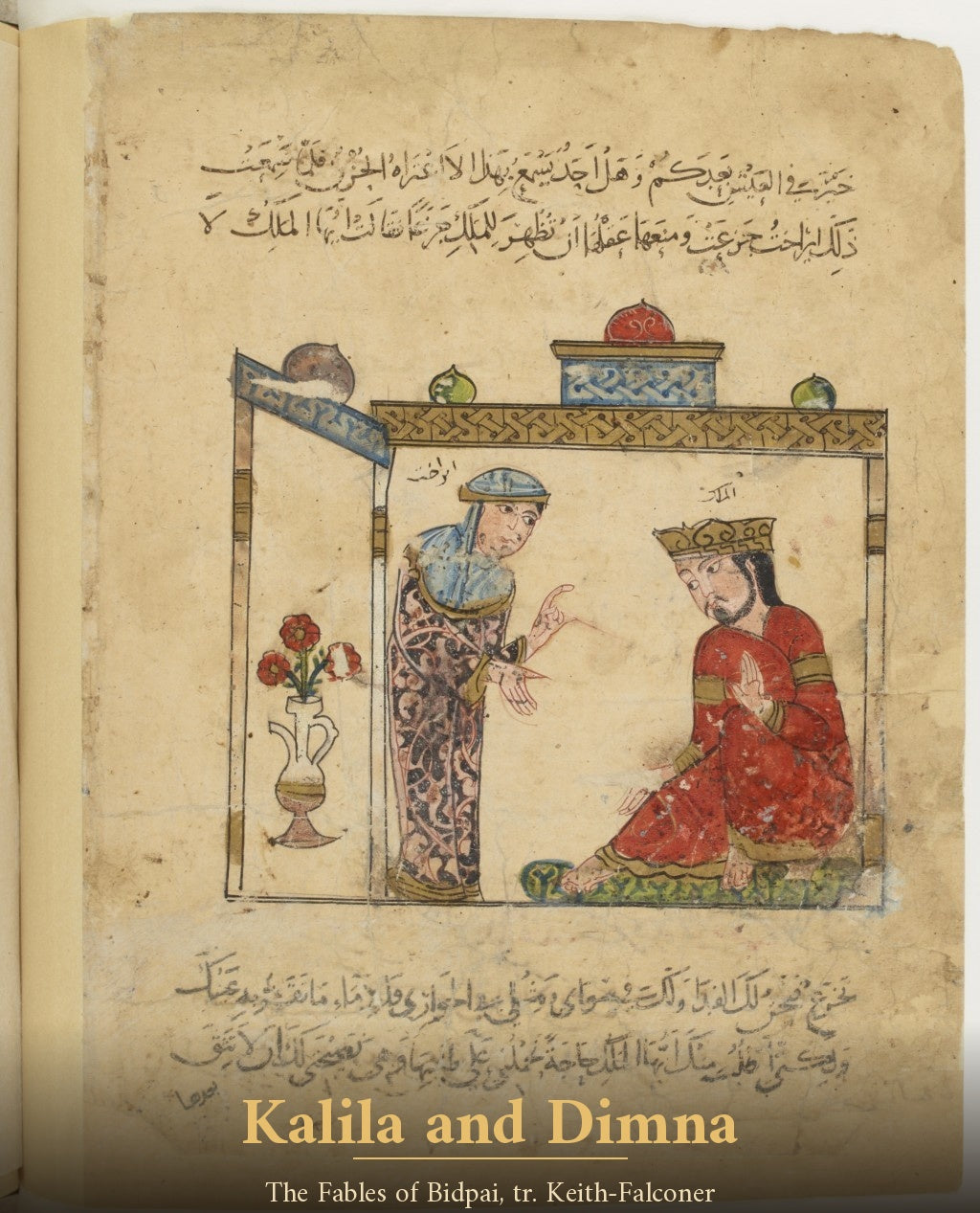
Text: 1885 Cambridge University Press edition, digitized by the Internet Archive (University of Toronto — Robarts Library), confirmed public domain. Cover: folio from a 13th-century Arabic manuscript of Kalila wa-Dimna, Bibliothèque nationale de France, Arabe 3465 — public domain, via Gallica / Wikimedia Commons.
Excerpt
In reliance upon God we write the tales and instructive stories of Kalilah and Dimnah, as translated by the wise.
THE STORY OF THE LION AND THE OX.
It is related that Dabdahram, king of India, said to Nadrab the philosopher, the wise man, and chief of the wise men: Show me the similitude of two men, companions or friends, between whom a false or astute cunning individual has produced dissension, so that they have been turned from mutual love and harmony to hatred and enmity.
Nadrab the philosopher answered: When a false man comes between two loving brothers, he disturbs their brotherly feeling and destroys their harmony.
Share