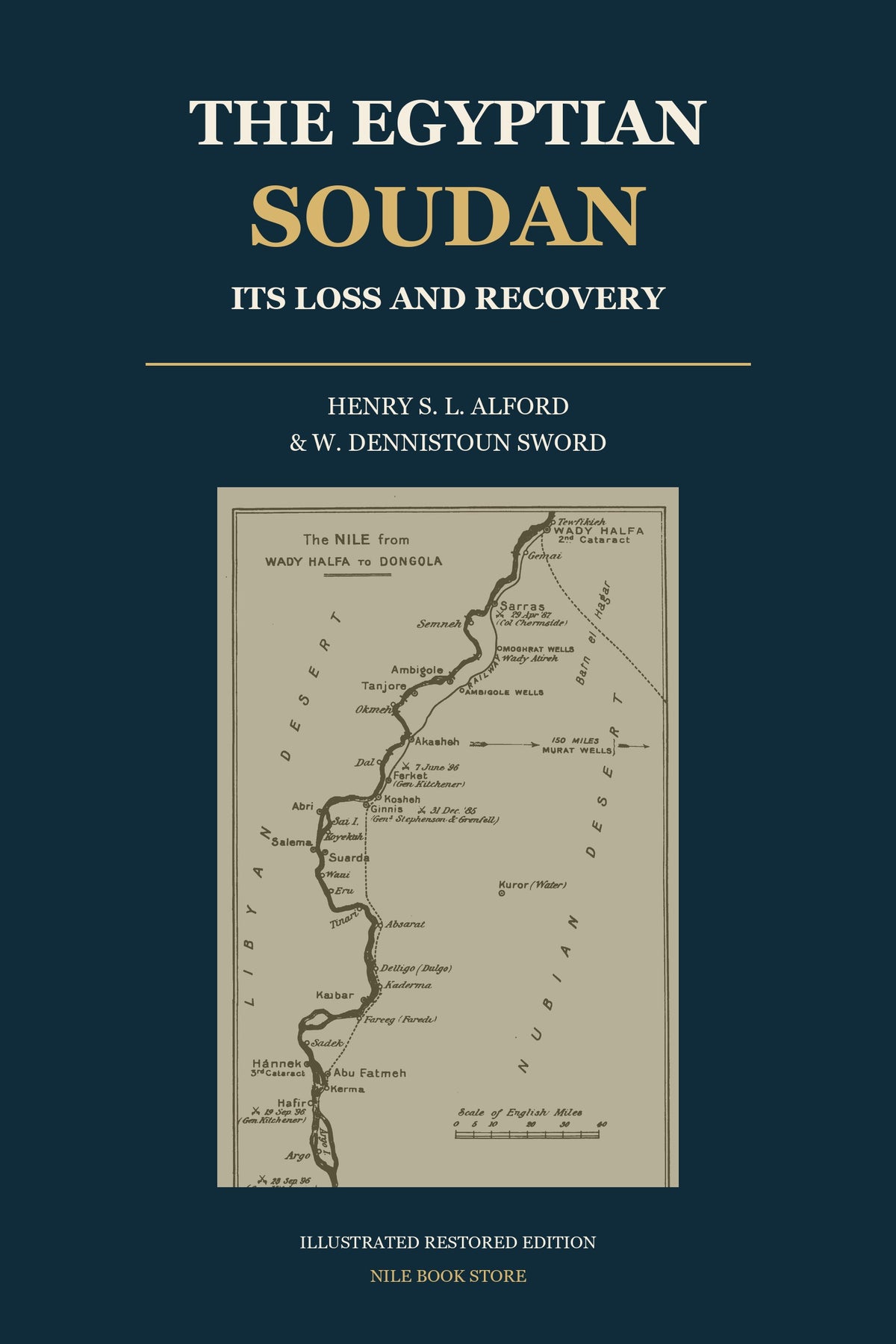
Henry S. L. Alford & W. Dennistoun Sword
The Egyptian Soudan: Its Loss and Recovery
The Egyptian Soudan: Its Loss and Recovery
Download instructions are supplied after checkout. Read on a compatible EPUB or comic-reading app.
Couldn't load pickup availability
Preview
Part I
Chapter I
Early History of the Soudan
Spread of Christianity — Conversion to Islamism — Conquest by Mahomed Ali — Khartoum founded —Growth of the slave-trade — Sir Samuel Baker — Gordon's first visit to the Soudan — Zobeir Pasha — Gessi — The prevalent discontent results in the insurrection of the Mahdi.
The expression ** Soudan '* literally means ** the Country of the Blacks," and includes, roughly speaking, one million square miles of trackless desert, dotted here and there with small patches of vegetation, through which flows its great artery the Nile. That part which lies within the immediate region of the Nile, and between the river and the Red Sea, is known as the '' Egyptian Soudan," and it is the latter country only that is treated of in this book.
The Soudan has never, in its known history, possessed any form of rule or government — other
THE EGYPTIAN SOUDAN part i
than that practised by savage rulers and slavedealing Arabs — unless Gordon s unsuccessful efforts be counted as such. This is due to its inaccessible position, the warlike and ungovernable qualities of its numerous tribes, and the enormous difficulty of holding in check, when subdued, the inhabitants of so vast an expanse of territory. There is no part of the world more stained with blood and oppression than the Soudan; no country where the worst passions of cruel races have had a freer vent, or where lawlessness has been more rife, or slavery more brutally practised.
Of the early history of the Soudan, designated by the ancients under the general term of Ethiopia, little is known, save of a few expeditions sent by rulers of Egypt to explore and conquer the regions of the Upper Nile. The first expedition history tells of is one sent by Amenhotep, King of Egypt, B.C. 15CX). Rameses invaded Ethiopia; Cambyses, the Persian conqueror of Egypt, marched his victorious army into that country, only to be destroyed; and numerous expeditions of a like nature were made by the succeeding rulers of Egypt, with varying success.
In 24 A.D. an invasion — contrary to all precedent — was made by the Ethiopians, under Candace, Queen of Merawi, into Egypt; but, after a fierce battle at Elephantine, they were defeated by the Romans under Petronius. Merawi at this time was the principal city in Ethiopia, and, according to some writers, was mightier than the far-famed Thebes; but to-day the only monuments left are the ruins of the ancient capital Nepata, the modem Jebel Barkal, near Merawi.
Without going into a detailed history of the numerous attempts at the conquest of the Soudan, suffice to say that up to its subjugation by Mahomed Ali, early in the present century, no Egyptian monarch had ever held the country for any length of time; and in spite of repeated invasions, the First Cataract always remained the extreme Southern boundary of Egypt.
Christianity began to penetrate the higher reaches of the Nile during the fifth century, and remained there for 800 years, when it gave way to Islamism. It was not until the thirteenth century that the green banner of the Prophet waved triumphant in Ethiopia, and then only at the point of the sword. This was brought about by the Egyptian sultan, Dhaber B6bars, who conquered Dongola, then an independent Christian kingdom; and the inhabitants, the ancestors of those who now so fanatically perish in defence of Islamism, fell with the same fanaticism and enthusiasm for the sake of the Cross. They were out-numbered, however, and the whole of Upper Nubia was overrun with tribes of wandering Arabs, who had embraced the Koran, and now set themselves up as governors after all but exterminating the inhabitants.
The year 1821 a.d. is an important one in the history of the Soudan. Mahomed Ali, Khedive of Egypt, despatched an expedition up the Nile under 4 THE EGYPTIAN SOUDAN part I
his son Ismail, and the provinces of Dongola (hitherto a separate kingdom), Kordofan and SennAr were conquered and annexed. Khartoum was founded and made their capital. Military stations were established on the Blue and White Niles, and the provinces were, as far as possible, brought under the rule of the Egyptians. The only result of Mahomed's conquest was to make Khartoum the great central slave-mart of the Soudan, though of course the trade itself had been long established.
During the rule of Abbas, Mahomed s grandson, who ruled Egypt from 1848 till 1854, the Soudan was in a deplorable condition. Abbas was succeeded by Said Pasha, who will always be honourably remembered in connection with the Soudan, as being the first Egyptian monarch who made any active attempt to suppress the slave-trade; but his efforts were futile, for he was powerless to enforce his wishes. Although the country had been annexed and military garrisons had been established, the Arab tribes had never been subjected to any form of rule or government, and all that could possibly be expected of them was payment of some tribute of varying amount.
In 1 86 1 when Sir Samuel Baker visited the Soudan — then governed by Musa Pasha — he found it in the same lamentable condition. In 1869 he was appointed Governor-General of the Equatorial
' Khartoum '' means an ** elephant's trunk," and was probably meant to describe the narrow neck of land between the White and Blue Niles, on which the city stood. Provinces, with control of the country south of Gondokoro. The administration by the Egfyptian pashas — who had made a practice of leasing large territories to traders who used them for slave-dealing purposes — had reduced the wretched inhabitants to the lowest ebb of misery. Sir Samuel Baker made vigorous efforts to put down this execrable traffic, by which whole countries and districts in Equatorial Africa had been depopulated, and he succeeded in dealing heavy blows to the trade. Had he obtained any assistance from the corrupt Egyptian officials, Khartoum as a slave-mart would have ceased to exist
Baker returned to Cairo in 1873, ind was succeeded the following year by Charles Gordon, a colonel in the Royal Engineers, whose name has become inseverably connected with the history of the Soudan.
Gordon regarded the suppression of the slavetrade as the highest of the duties entrusted to him. The policy was adopted of bringing all the Soudanese provinces under a firm rule, and in 1874 Darfur and Harar were annexed to Egypt. This policy was absolutely necessary if any successful effort was to be taken against the slave-dealers. Some of the latter, who paid rent to the Egyptian Government, were immensely wealthy and powerful, and assumed absolute control over large territories. The most notorious of these was Zobeir Pasha, who lived in princely style, exercised great influence in the Soudan, and practically controlled the slave- 6 THE EGYPTIAN SOUDAN part i
trade. Zobeir's position may be cited as an instance of Gordon's difficulties with the Egyptian Government Gordon had insisted that the destruction of Zobeir s gang was the turning-point in the slavetrade question, yet the Cairene officials not only ignored this fact, but created Zobeir a pasha, and treated him as an honoured gest, whilst Nubar Pasha (the Egyptian Minister) even offered to send Zobeir to assist Gordon in the suppression of the trade. He evidently believed in " setting a thief to catch a thief!"
On the 4th of August, 1877, a Convention was concluded between Great Britain and Egypt, by which all public traffic in slaves was prohibited; whilst private trade in Egypt was to be suppressed in 1884, and in the Soudan in 1889. Referring to this, Gordon wrote: "If the liberation of slaves takes place in 1884, and the present Goverment goes on, there cannot fail to be a revolt of the whole of the country.... It is rather amusing to think that the people of Cairo are quite oblivious that in 1884 their revenue will fall one-half... Seven-eighths of the population of the Soudan are slaves, and the loss of revenue in 1889 will be more than two-thirds."
Gordon was assisted by an Italian named Gessi, Governor-General of the Bahr-el-Ghazal; and in one year (March, 1878, to March, 1879) they
Gessi died in 1881, and was succeeded in the Bahr-el-Ghazal by Lupton Bey. Lupton had been a mate in the P. and O. Company's service. He became a prisoner on the fall of the Soudan, and died at Khartoum in 1891. succeeded in capturing sixty-three caravans of slaves. Needless to say their efforts were resisted in every way by the slave-dealers, and in June,
1878, a revolt, instigated by Zobeir, and led by his son Suleiman, broke out. The principal slavedealers had apportioned out, among themselves, the provinces of the Soudan, and they gave out that they would not stop short of Cairo. They were supported by Arab tribes, and seemed powerful enough to tax the strength of all Egfypt. This insurrection was suppressed by the bravery and energy of Gessi. Suleiman was shot, with eleven other ringleaders, in July, 1880.
Gordon's experiences would fill many volumes, and contain the most astounding revelations of cruelty and barbarity it is possible to conceive. He certainly broke the back of the slave-traffic, and if there had been any really honest intention to assist him on the part of the Egyptian pashas, his efforts would have put an end to it On his departure in
1879, and the reassumption of government by the Egyptians, the trade revived with remarkable activity, and the familiar crack of the slaver's whip resounded throughout the length and breadth of the Soudan.
We are now brought to a most important period of this history, namely, the rise of the Mahdi. That the inhabitants of the Egyptian provinces of the Soudan would sooner or later rise in a body and fall upon their oppressors, was only to be expected; but no one could foresee a rebellion so 8 THE EGYPTIAN SOUDAN part i
rapid in its growth, so fanatical in its nature, and so far-reaching in its consequences, as that which was now to take place.
The misery and poverty of the inhabitants, the venality and oppression of the Egyptian taxcollectors, and, above all, the discontent of the Baggara tribe — the great slave-traders of the desert — rendered the Soudan in a condition ripe for open rebellion, wanting only some leader to appear who could unite all the forces under one flag. The Mahdi was that person, and his banner was that of Islam, ever a subject of overwhelming influence with the fanatical Arabs.
It is interesting to note the> extent of the Egyptian Soudan at the time it fell into the hands of the Mahdi. It comprised: Lower Nubia (between Assouan and Dongola), Upper Nubia, which included Dongola, Berber, Shendy, Halfyieh (Khartoum), Sennir (on Blue Nile) and other districts; Kordofan (El Obeid), Darfur, the Equatorial provinces of Lado, Bahr-el-Ghazal, &c; the Suakin districts, and Harar and Galla (now provinces of Abyssinia).
A restored, illustrated digital edition of a scarce 1898 history of Sudan and the Nile campaigns.
Written by Henry S. L. Alford and W. Dennistoun Sword, The Egyptian Soudan: Its Loss and Recovery traces the upheavals that followed the Mahdist rising, the fall of Khartoum, and the military campaigns that culminated at Omdurman.
About this Nile Book Store edition
- Consumer-ready, reflowable EPUB for phones, tablets, and e-readers
- 27 restored narrative chapters
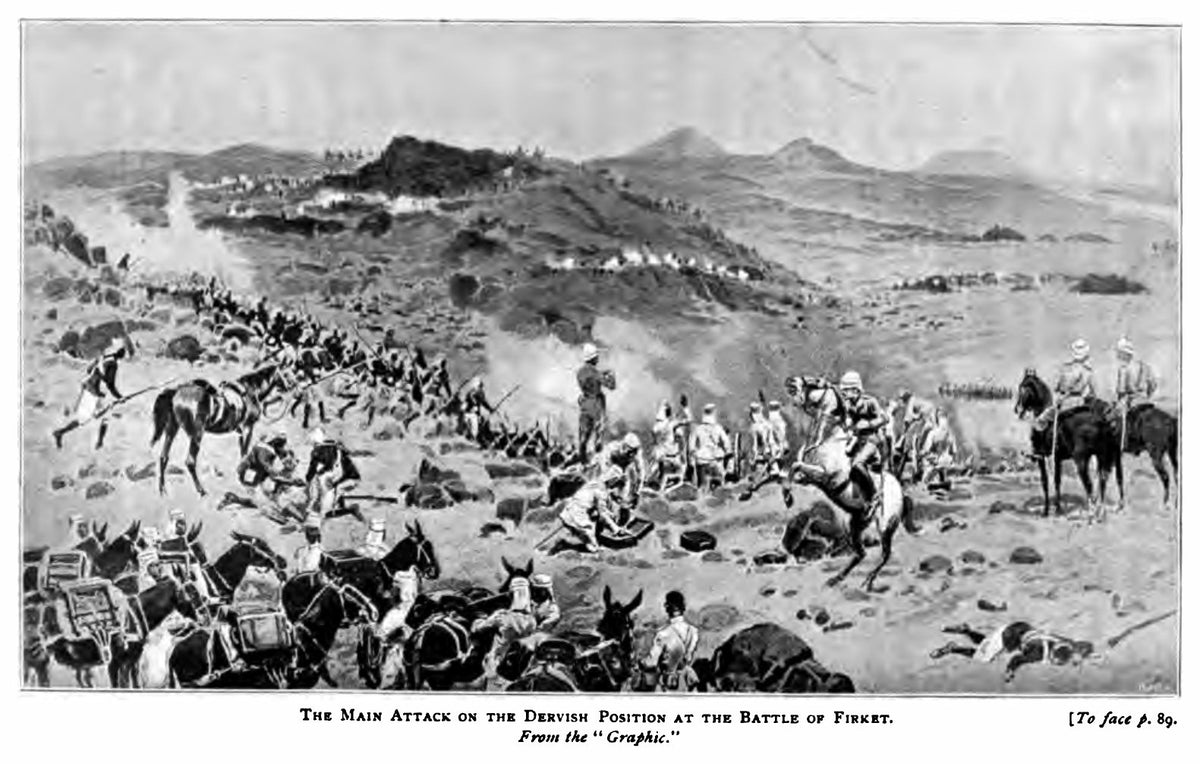
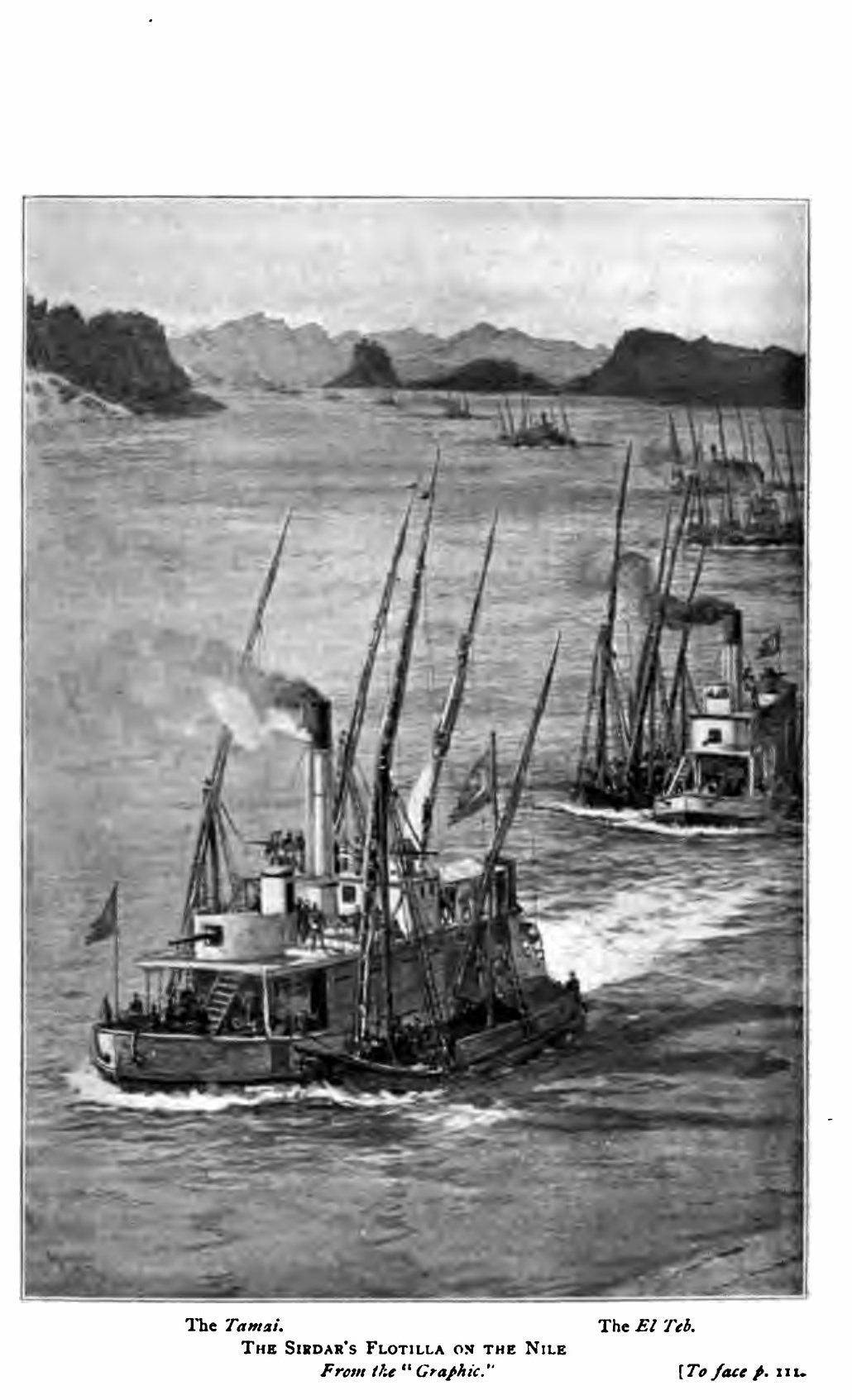
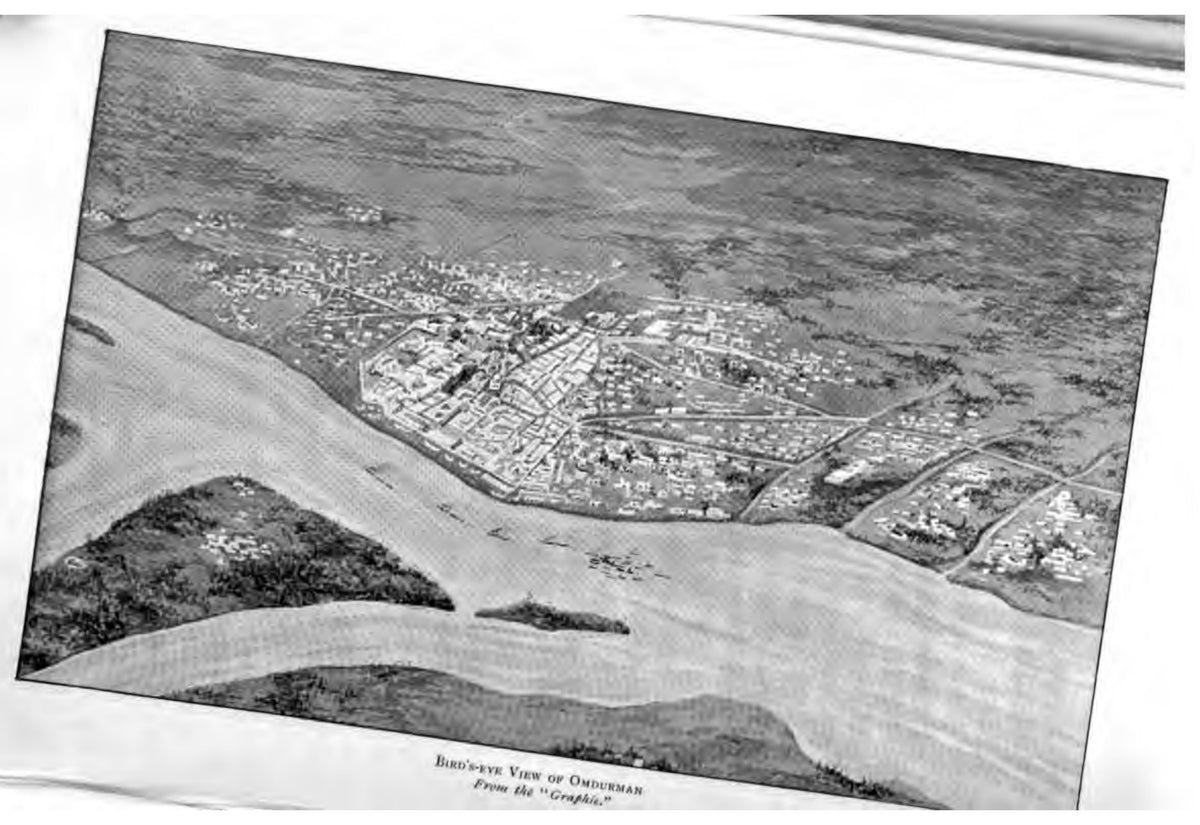
- 33 original portraits, illustrations, battle plans, and campaign maps
- 46 high-resolution facsimile pages preserving the complex appendices and index
- Clean navigation, searchable text, and an enlarged modern cover without decorative borders
The edition is based on a public-domain 1898 scan. Original illustrations and maps are preserved as available in the source, while the narrative has been carefully reconstructed for comfortable digital reading.
Historical context: This work was written from a late nineteenth-century British colonial perspective and contains period language and interpretations. It is presented as a primary historical source, not as a modern account.
Format: EPUB download. No audiobook is included.
English edition. Marked for a future Arabic translation.
Share