Sir Samuel W. Baker
The Nile Tributaries of Abyssinia and the Sword Hunters of the Hamran Arabs
The Nile Tributaries of Abyssinia and the Sword Hunters of the Hamran Arabs
Download instructions are supplied after checkout. Read on a compatible EPUB or comic-reading app.
تعذر تحميل معلومات توفر الاستلام
Why this book belongs in our Sudan collection
Although its title refers to Abyssinia—the historical name for Ethiopia—much of this account follows Samuel White Baker through eastern Sudan and the Sudan–Ethiopia borderlands. It describes Kassala, the Atbara and Setit rivers, landscapes, wildlife and encounters with local communities. Its focus is travel and exploration rather than the later Mahdist wars.
Baker describes the Bisharin (spelled Bishareen in parts of the text), Hadendowa and Hamran, among other communities. His observations touch on dress, marriage, nomadic life, leadership, religion and hunting traditions. This is a traveller's account, not a comprehensive or neutral history of these peoples.
First published in 1867, the book reflects a nineteenth-century European traveller's perspective. It contains colonial prejudices, hunting accounts and descriptions of enslavement. These are preserved as historical testimony, not endorsed by Nile Book Store. Medical and geographic assertions are historical observations, not current advice or verified modern science.
This edition includes
- Complete English text; 22 chapters
- Reflowable EPUB with corrected linked contents
- Sudan-focused introduction and historical context
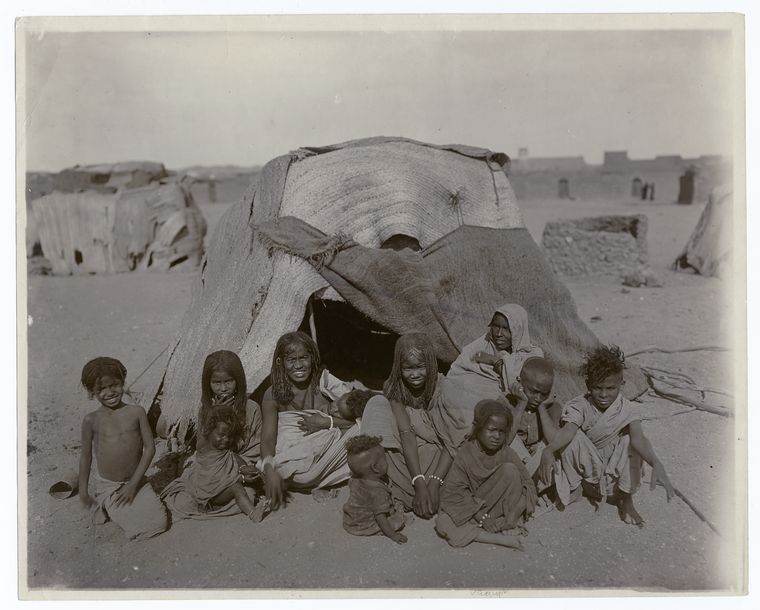
- Credited archival Bisharin photograph cover
No audiobook is included. Digital download; no physical book or shipping.
Read a sample
Chapter I — Above the Cataract
WITHOUT troubling the public with a description of that portion of the Nile to the north of the first cataract, or with a detailed account of the Egyptian ruins, that have been visited by a thousand tourists, I will commence by a few extracts from my journal, written at the close of the boat voyage from Cairo :—
"May 8, 1861.—No air. The thermometer 104 degrees Fahr.; a stifling heat. Becalmed, we have been lying the entire day below the ruins of Philae. These are the most imposing monuments of the Nile, owing to their peculiar situation upon a rocky island that commands the passage of the river above the cataract. The banks of the stream are here hemmed in by ranges of hills from 100 to 250 feet high; these are entirely destitute of soil, being composed of enormous masses of red granite, piled block upon block, the rude masonry of Nature that has walled in the river. The hollows between the hills are choked with a yellow sand, which, drifted by the wind, has, in many instances, completely filled the narrow valleys. Upon either side of the Nile are vestiges of ancient forts. The land appears as though it bore the curse of Heaven; misery, barrenness, and the heat of a furnace are its features. The glowing rocks, devoid of a trace of vegetation, reflect the sun with an intensity that must be felt to be understood. The miserable people who dwell in villages upon the river's banks snatch every sandbank from the retiring stream, and immediately plant their scanty garden with melons, gourds, lentils, &c. this being their only resource for cultivation. Not an inch of available soil is lost; but day by day, as the river decreases, fresh rows of vegetables are sown upon the newly-acquired land. At Assouan, the sandbanks are purely sand brought down by the cataracts, therefore soil must be added to enable the people to cultivate. They dig earth from the ruins of the ancient town; this they boat across the river and spread upon the sandbank, by which excessive labour they secure sufficient mould to support their crops.
In the vicinity of Philae the very barrenness of the scenery possesses a charm. The iron-like sterility of the granite rocks, naked except in spots where the wind has sheeted them with sand; the groves of palms springing unexpectedly into view in this desert wilderness, as a sudden bend of the river discovers a village; the ever blue and never clouded sky above, and, the only blessing of this blighted land, the Nile, silently flowing between its stern walls of rocks towards the distant land of Lower Egypt, form a total that produces a scene to be met with nowhere but upon the Nile. In this miserable spot the unfortunate inhabitants are taxed equally with those of the richer districts—about fivepence annually for each date palm.
About the cover
Bisharin group at Wadi Halfa, New York Public Library, digital ID 88455; broadly dated 1860s–1920s. This contextual photograph is not identified as Hamran people or as part of Baker’s expedition. No known copyright restrictions. Photograph record.
يشارك